

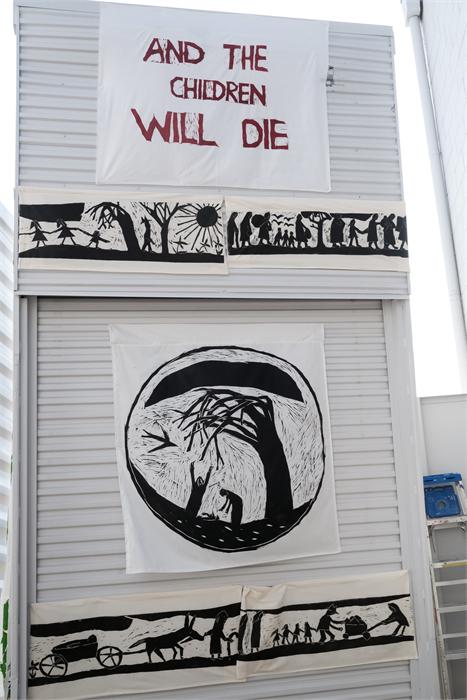
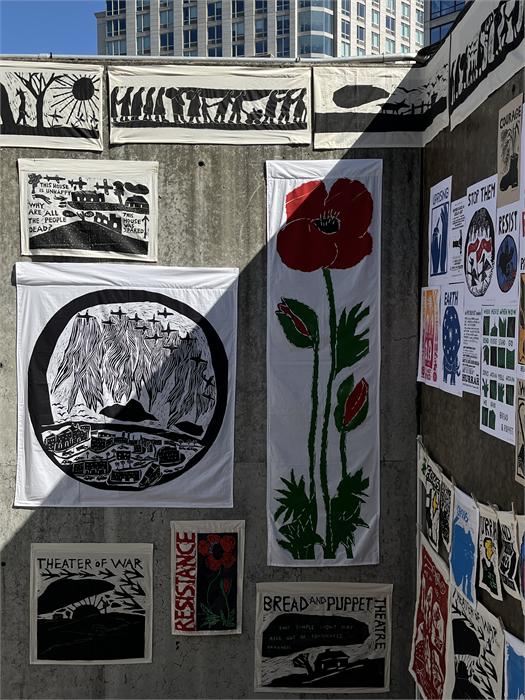
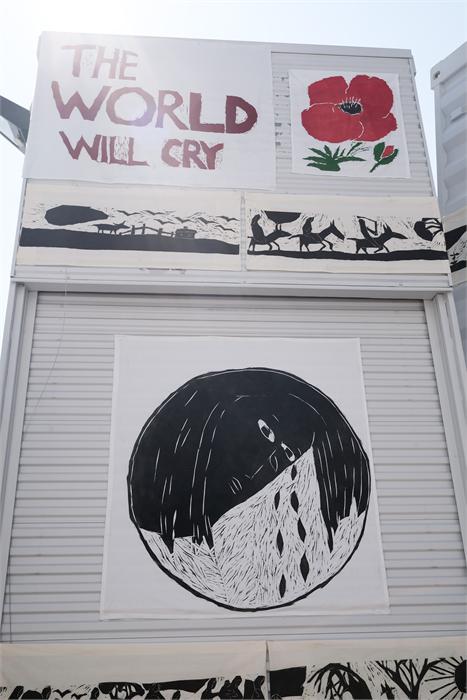



Matthias Grünewald (c. 1470–1528) was a German Renaissance painter whose Isenheim Altarpiece (1512–1516) was created for the St. Antonite monastery in Colmar, France. The monks treated patients with ergotism, a disease caused by rye fungus. The altarpiece depicts intense ailments and suffering, as well as miraculous healing and resurrection. While crossing the Alps in 1502, Grünewald witnessed a total solar eclipse, an experience that shaped his use of extreme colors and is depicted in the Altarpiece.
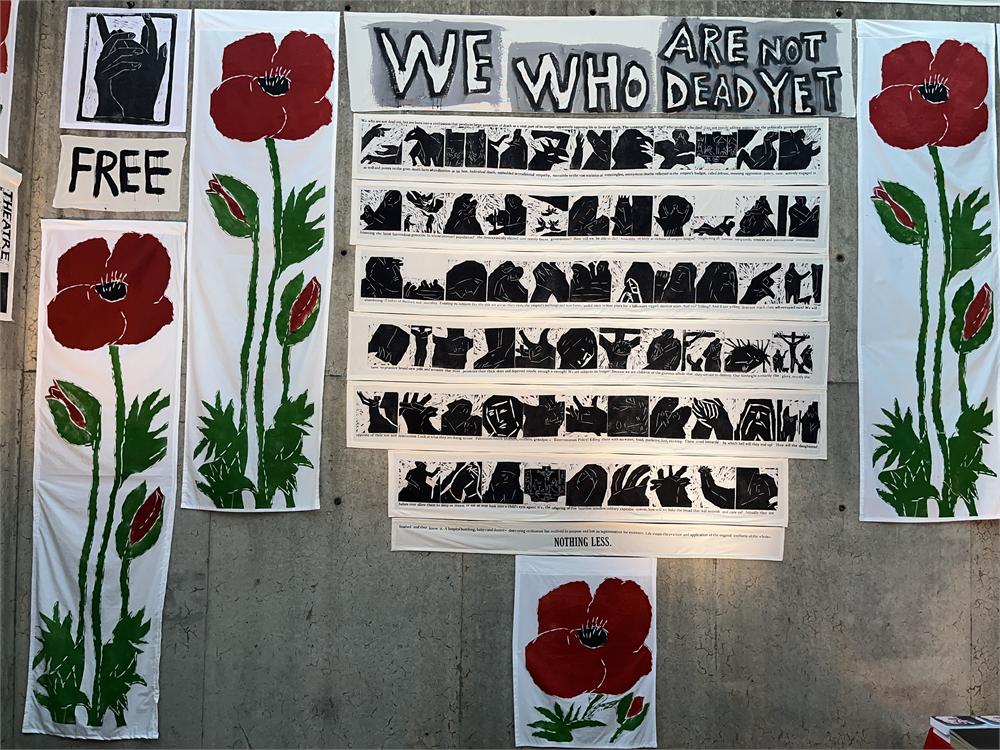
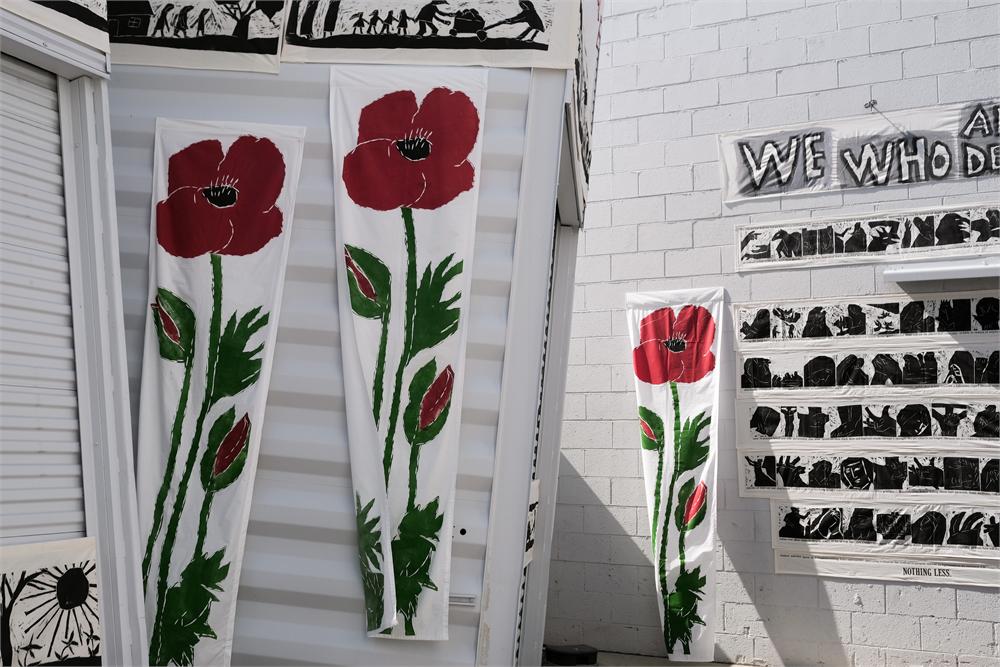
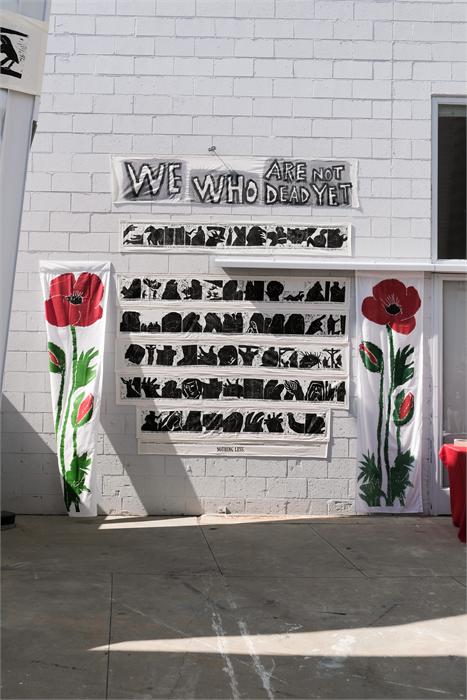
The Isenheim Altarpiece has in fl uenced Peter Schumann for over sixty years. The 64 Isenheim Studies presented here are the earliest known references to Grünewald in his work. In 2024, the complete set, which had never been printed, was discovered in a box labeled (in Elka Schumann’s handwriting) “Grünewald woodcuts, early 1960s.” Peter carved the studies as he saw them, not in reverse, so the printed images appear reversed from the painting.
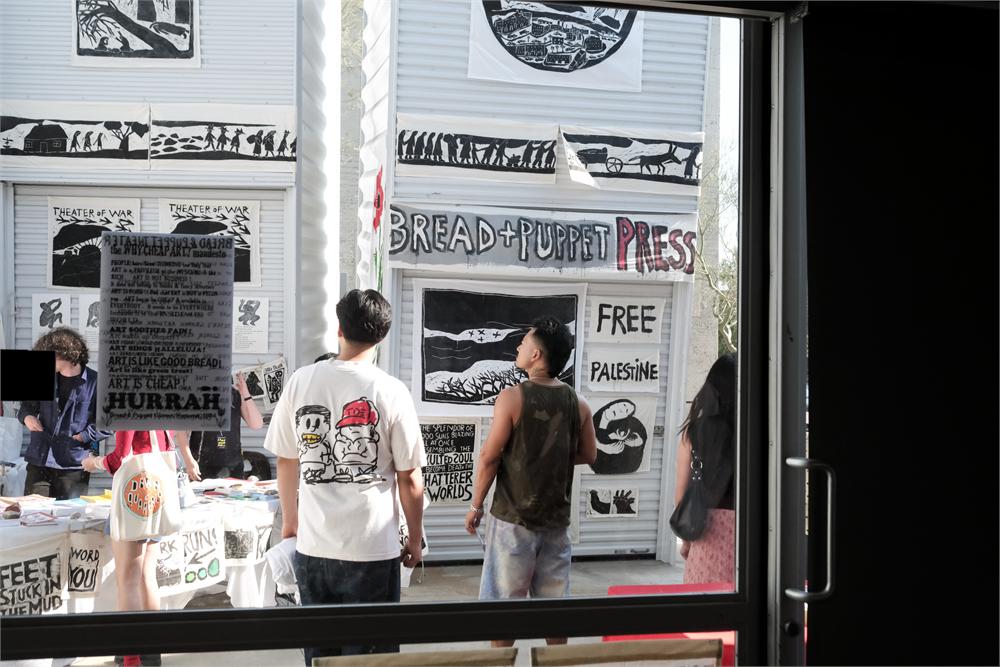
Accompanying the prints is a text written in 2024 by Schumann in response to the US/Israeli genocide of Palestinians in Gaza, a meditation on war, empire, and human responsibility. Aptly, the historical Jesus was a Palestinian Jew, persecuted, tortured, and executed by the Romans for rebelling against the empire—a fate shared by many Palestinians today.
There will be an opening reception on Saturday, August 29 from 5:30 pm – 6:30 pm.